Skip to content


No doubt: Social media marketing is on the rise

Forrester just released some research on interactive marketing trends in the US.  Predicting a decline in total ad spend, they say that there will be a substantial shift to other channels. As with mobile marketing predictions, I am always skeptic about putting numbers, as the only certain thing is that they will never be right.  Every research organization has a different definition on the categories of mobile and social media. But as with any major trend change, leading research organizations contribute to the prophecy coming true.

2009 07 Forrester US interactive marketing spend Forrester’s prediction that the mobile marketing market in the US to be 391m seems to be wildly underestimated.  However, numbers are numbers and what matters is whether you believe the trend.

My personal experience with ad agencies is that they at present simply do not have the capabilities and understanding in place to take their clients to the next stage in social media marketing. I think Forrester’s predictions are too optimistic in the short term, but I think there will be a massive increase in the long term.  The main reason is that user’s have far outrun the marketing industry in their update and use of social media.  But agencies are driven by money, and as long as their client’s are not demanding anything new, they are happy not to rock the boat and to keep charging for traditional campaigns.

As with any new trend though, specialist companies and start-ups are the ones leading the way, to later be acquired by the big groups. Unfortunately, it definitely seems like the overall climate is tough right now for start-ups and looks to be tough for some time, although most experts agree that now is the time to start-up something new.  But if anyone has statistics on the number of companies starting up with social media marketing as their main business, feel free to share, as that will certainly provide the best indication of whether Forrester is on track with their predictions.

Posted in Mobile Marketing, Social Media Marketing.

Tagged with , , , , .


Google and Android have a chance, but “getting it right” is hard

I was recently asked to voice my opinion on whether Google would succeed with their mobile strategy, and to identify any roadblocks Google – or other new entrants.  What are the most significant problems to be solved given user’s needs? What are the vulnerabilities in incumbents’ strategies that a new entrant might exploit? I do think Google is on to a good start. However, with mobile devices, it usually comes down to a few things:  Do the phones look cool and are they easy to use?

In terms of looks, few will claim the Razr was a brilliant phone that was easy to use. But the look of it was amazing when it first came out, sparking lots of copy cats and resulting in an astounding success for Motorola at the time. With Android, the first G1 devices certainly fit neither criteria of cool looking and easy to use, and their “success” is arguably that they appeal to the early adopters – the smartphoniacs which was a brilliant terms coined by the WSJ this week.
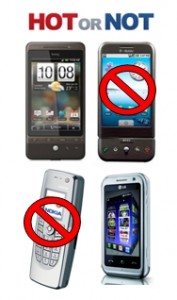
Hot or notHowever, this is changing quickly. The HTC Hero looks stunning on the outside and the UI also looks great (yes, I would have bought one in a second if it had a keyboard which is my main requirement), and several other handset manufacturers will likely put out cool looking phones.

This brings it to the second area, usability, which is far more difficult to get right.  Not only does the phone itself has to be easy to use (and look good) – but the services around have to as well.  I think Google is doing the right thing by being open and allowing for good UI implementations like HTC did with the hero (but failed with the G1). Where I am not so convinced though, is with the services that are being built around the phones – i.e. “iTunes vs everything else”.  There seems to be a “Field of Dreams” mentality in place in the industry, that all you need to do is to build an appstore, and users will come. I do not subscribe to this at all (which I have previously talked about in AppStore Schmappstore).

Apple’s AppStore works because iTunes is incredibly well designed and they had a huge base of users to pull from – who also happened to have their credit cards registered.  This is where most players still do not do it right: Provide for a great user experience on device AND web, along with an easy billing option. I am quite disappointed with Nokia’s Ovi store both on device and on web when you compare it to the current ideal which is iTunes, and their music application on PC was so buggy and slow I had to remove it (and I am not the only one disappointed with Ovi).  Although I do not want to put a detailed Ovi vs iTunes analysis here, looking at the picture below is kind of comparing Wholefoods with Aldi.

iTunesOvi

What is surprising is that Google has ignored building a web based AppStore which I simply do not get, because they certainly have people within the organization that understand mobile. I guess they are hoping for other players to do it, but this seems like a dangerous strategy.

And then you have the magic missing piece, which seems to be so easily ignored: Billing.  Billing through premium SMS is still screwed up as a business model as carriers are too greedy in their revenue shares, putting brakes on the development of a healthy eco system.  Credit card is not ideal as a platform – unless you already have a large installed base of users (like iTunes had prior to launching the AppStore), perhaps because of a natural reluctance to whip it out for micro transactions.  While free apps certainly drive traffic and does not require billing, you need to offer paid apps to attract good content providers.  Mobile Marketer recently pointed out that apps have really appeared as a main selling point, and that you “developer support as much as an ingenious user experience, will make or break these high-end device offerings”. While I agree apps are certainly important and a selling point, it is certainly third on the list after cool looks and a great user experience (of course, good app offerings are part of the user experience), and I have no doubt Google will manage to attract good apps and app developers in the long run.

So these are some frictions that have really been around for quite some time. Funny enough, Apple has openly shown the world that if you provide a good business model and billing, along with a great user experience – good things happen. This could have easily be copied by other players (except for the installed base part), but current attempts seem to be a long ways away.

Posted in Mobile Entertainment, The Business of Mobile.

Tagged with , , , , , , , , , , , , , , .


Should you care about the size of mobile marketing?

As a former analyst and researcher, I find myself somewhat ambivalent about research reports that deal with the size of the growth of a new market. At Ernst & Young’s Center for Business Knowledge I had access to all the research in the world, and I recall vividly creating PPT presentations and reports explaining how big e-commerce was going to be. I also recall the skepticism I encountered in the late 90’s  and I recall how all estimates turned out to be massively understated (although some sectors were overstated in the short term and understated in the long term).

Online marketing vs mobile marketing?

I have since developed a filter on any kind of number that is thrown out there to justify the existence of research organizations (where are the I-banks and Consulting firms these days? This stuff used to be free!).  The latest one comes from UTalkMarketing.com which claims that despite huge growth, mobile advertising is non-significant as an advertising channel.  There is a clear confusion about what mobile advertising is (For instance, what is advertising and what is marketing when it comes to mobile? If mobile is used as a response mechanism in a campaign, is it still advertising? Or just part of a marketing mix?).

Mobile guru Tomi Ahonen has picked up on this and points to a number of conflicting research “studies” (warning: Tomi’s posts tend to be lengthy. You may need to get a cup of coffee first. But definitely worth reading).   Tomi’s main point is to look at the relative growth of mobile, and also to the fact that it is growing when most other outlets (including online) has declined in this economy.

Where Tomi goes on though – and this is a frequent argument in the case for mobile advertising – is to point to the high response rates in mobile.  I feel that this argument – although certainly compelling – can be a dangerous one.  High response rates in a nascent market can simply be that there are not a whole lot of campaigns out there, and people click/respond simply because they have nothing better to do.  They have not been subjected to the display fatigue you see online.  I am worried that once response rates drop, it may give non-believers a reason to talk mobile down.  I myself have been among the ones thoroughly disappointed when a leading ad network in their standard sales pitch said their average CTR was 7-8% and our campaign ended up less than 2%. Later research confirmed that it was not due to our service, we were simply misled as the 7-8% rate was at least 1-2 years prior – when there were a lot less ads out there. Overselling helps nobody – and touting these wildly successful, almost unbelievably successful campaigns seems to be setting the wrong expectations.

Instead, the focus needs to be on the advantages of mobile as a response channel, as an interactive device, that is with you 24/7.  The power comes when mobile is a natural part of the overall marketing mix, and when the inherent uniqueness of mobile is fully exploited. That has to do with clever creative rather than force feeding high expectations based on past achievements.  I am convinced that mobile marketing will be much larger than what has been envisioned, just as e-commerce turned out much bigger than people expected back in the 90s, but given mobile’s complexity, it is bound to take longer than it did online.

What keeps the momentum rolling is the passion of the people involved in the industry. And as you can see from this presentation from Razorfish, the big guys are starting to catch on (incidentally, this presentation was hotly debated in terms of its value, but there is no denying it provoked thoughts).

Posted in Mobile Marketing.

Tagged with , , , , , , , , .