I was recently asked by a senior level product manager when discussing how we could get my company’s application preloaded on their handset: “How can your application make our handset stand out? How can you do it differently than you do it with other handset manufacturers [through regular download and install channels]?” The question was very valid of course, but I was left reaching for an answer. An on-the-spot idea generation led to suggestions like integrating with a hardware button for quick launch etc. The ideas were not necessarily bad, but they reflect how handset manufacturers think of themselves: Makers of mobile phones.
Granted, there have been moves by Nokia and others to venture beyond making handset, setting up content portals, buying ad networks, etc etc. One can argue though that none of the handset manufacturers have successfully managed to move themselves beyond the category of making communications devices. Does this mean handset manufacturers are destined to go the way of the US railroads, who never saw automobiles and planes as a threat, as their definition of their industry was transporting people by rail, instead of being in the “people moving business”?
Certainly Apple has shaken things up by creating a brilliant closed eco-system for the iPhone, suddenly making the general population aware that downloading applications to a phone is easy and cool (where 80% of the population has barely realized this has been available since 2001 on Java handset and since the mid 90’s on PDAs). Apple has through the iPhone clearly redefined the mobile phone, as the iPhone exists within the entertainment and information company that is Apple, with everything that comes with it.
So are the answers for Nokia, Sony Ericsson, Samsung, LG, Motorola and others to redefine themselves as entertainment companies, or personal lifestyle companies? Or is it to build AppStores? (The answer to the last you can find by reading my post AppStore Schmappstore). They may not be the complete answers, but certainly staying primarily focused as makers of personal communication devices is a losing proposition for all, unless you have a clear cut leadership in design or cost – which none of them can really claim today.
The challenge to differentiate through software and application preloads is also increasingly difficult, at least if you are talking about applications that stand alone on the handset. With a move towards open platforms such as Android, where you as a developer can finally get access to integrating your application deep into the phone’s functionalities, how do you then implement it differently on just one range of handsets? Turn off functionality for others? That is never a good idea as others who may provide parts of the value proposition of your app could suddenly seem more attractive.
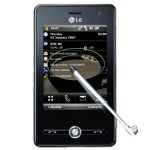
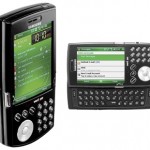
One aspect though, and I have vigorously defended this point on many occasions: You cannot get away with not making your phone look cool. I have been presented with the argument that with laptops, it is no longer a notion of cool, but that the software on the device provides good value. For the life of me I do not remember when “cool” was a criteria for laptop choice, until actually recently when Apple’s Macbooks became more mainstream and people were again wowed by design on a device traditionally not chosen for design. In fact, Apple was more inhibited by software choice than they gained from it, and arguably Macbooks really only took off after they offered Intel chips and possibilities for running Windows as well. And now you can see Dell advertising for laptops in multiple colors as the big selling point, so it almost seems the PC industry is going in the other direction as software and platforms have been standardized and commoditized. I have heard other strong arguments such as comparing mobile phones to TVs, where people now want bigger and bigger. I agree there – TV is about content, and once they became flat, bigger became better (not so when they were not flat!). But the mobile phone cannot be compared to the PC or TV simply because it is so much more personal and is taken everywhere and showed off everywhere. Do you really think anyone would have bought the iPhone if it did not have the “wow” factor? Mobile phones (which in itself may be an outdated term) are – and will always be – a choice strongly influenced by personal preferences in terms of the look and feel of it.
Hot or Not?
So the answer for manufacturers may lie in working with companies that provide more than mobile applications – that focus on a service that extends well beyond the handset, and that can target specific user value propositions, such as social networking, connectedness, messaging, calendar and scheduling and more, and deliver it all as a bundled experience with the handset. It all depends on the chosen strategy of the manufacturers – in terms of how they re-define themselves to be. Are they lifestyle companies? Are they companies that help me manage my business day and personal life? Are they the ones that connect me to all my friends – on all platforms? Define yourself too narrow in this field and you lose. Define yourself too broad and you lose. Getting there will not be easy, but in order to get there, manufacturers need to start experimenting with innovative partners that can deliver cross platform (web and mobile) services in a much larger scale than today. They need to be agile and quick, see what works, and quickly make adjustments. This is a far cry from long winded product management cycles and often disconnect between marketing and product management that you see today in most of the majors. And most of all – they have to make the phone look cool 🙂






Recent Comments